
ADHD, Autism, 2e, & Dyslexia Evaluations
Finally, Get Answers That Actually Fit.
Assessments for Adults, Teens, and Children (Ages 5+)
For adults who have spent years wondering. For parents who know their child is brighter, more capable, or more complex than any explanation they’ve been given so far. And, for anyone who has collected diagnoses that never quite explained the full picture.
• ADHD • Autism (Including Non-Stereotypical Presentations) • Dyslexia & Specific Learning Disabilities • Giftedness & Twice-Exceptional (2e) Profiles • Co-Occurring Mood & Behavior Disorders • Neuropsychological, Psychodiagnostic & Psychoeducational Assessments — Including Independent Educational Evaluations (IEEs)
For California & New York residents

If you’ve been told it’s “just anxiety”… if your child is bright but struggling in ways no one can explain… if you’ve collected half a dozen diagnoses and none of them quite click… if you suspect ADHD, autism, a learning difference, a mood disorder, or all of the above, but you don’t match the stereotypes you grew up seeing — you’re in the right place.
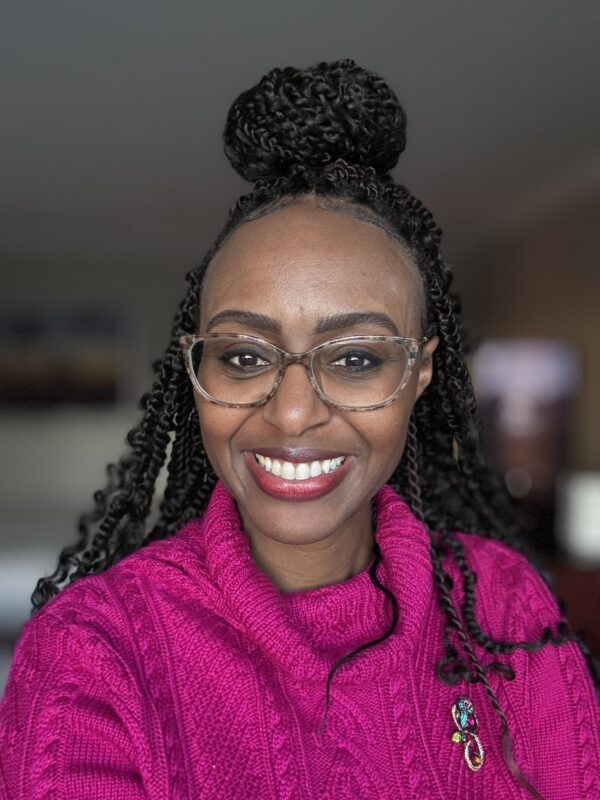
I’m Dr. Monica Blied, and I specialize in neuropsychological and psychoeducational assessments for children (5+), teens, and adults — with deep expertise in late-diagnosed autism and ADHD, twice-exceptional (2e) profiles, giftedness, dyslexia and other learning differences, and co-occurring mood and behavior disorders. My clients are often bright, high-masking, and have spent years being told they’re “too sensitive,” “not trying hard enough,” or “fine, actually.” They’re not fine. They’re undiagnosed. And that changes everything once we figure it out.
I also bring something to this work that no training program can teach: I am neurodivergent myself, diagnosed as an adult, and I know firsthand what it means to finally have language for something you have been living with your whole life. I am recognized as a go-to thought leader on late-diagnosis of autism and ADHD (diagnoses made after early childhood), with particular expertise in AFAB (assigned female at birth) and non-binary individuals, BIPOC and other marginalized clients, people living with chronic illnesses, and those who are both intellectually gifted and neurodivergent.
Schedule your complimentary 15-minute consultation →
Keep scrolling if any of this sounds familiar. ↓
Does any of this sound familiar?
If ADHD might be part of the picture…
You are frustrated with not being able to get things done…
- You start a project — super excited and super invested — and weeks later that project is still waiting on you to work on it…
- You are able to be productive, but usually it’s not doing what you actually planned to do. Oops…
- Or you (your child, your teen) have been told you’re “so smart” your whole life… but the “getting it done” part keeps falling apart, and nobody seems able to explain why.
You’ve always been able to get good grades — but it’s usually by waiting until the very. last. minute. then rushing to finish right before the deadline…

- You have to read and reread things — over and over, and over — just to get what it said … even things you enjoy 🙁
- Sometimes, you are able to “hyperfocus” … and in those sweet moments, you. are. UNSTOPPABLE! Oh yeah 🙂 … but you can’t summon it on demand, and that’s maddening.
- Maybe your kid is reading way above grade level but melting down over a ten-minute worksheet. Or acing math in their head but falling apart the second they have to show their work on paper.
You really were trying to listen to what they said, but then you got distracted by your thoughts, then by that spot on the wall, then again by your thoughts and wondering what they just said. Ugh.
- You wonder why it seems you can’t manage to do what YOU KNOW you’re able to do. Like, WTH. People joke that you’re “lazy” or “dumb” or “not trying” — and you know that’s not it. There’s a disconnect, and you need to know what it actually is.
You don’t know if it’s depression, anxiety, ADHD, all three, or something else entirely. You just want to find out what’s going on and learn how to deal with it.
A note on how I assess ADHD: Every ADHD evaluation I do — whether you choose the abbreviated psychodiagnostic option or the full comprehensive neuropsychological battery — includes an objective assessment of IQ and the specific areas of brain functioning most sensitive to attention problems: working memory, processing speed, and executive functioning. This is important, because ADHD is not just about being “distractible” — it shows up in how quickly you process information, how much you can hold in your mind at once, and how well you can plan, initiate, sequence, and complete tasks. A quick questionnaire-based “ADHD screening” can’t give you that. Real data can.
…Or maybe it sounds more like this (autism, including non-stereotypical presentations):
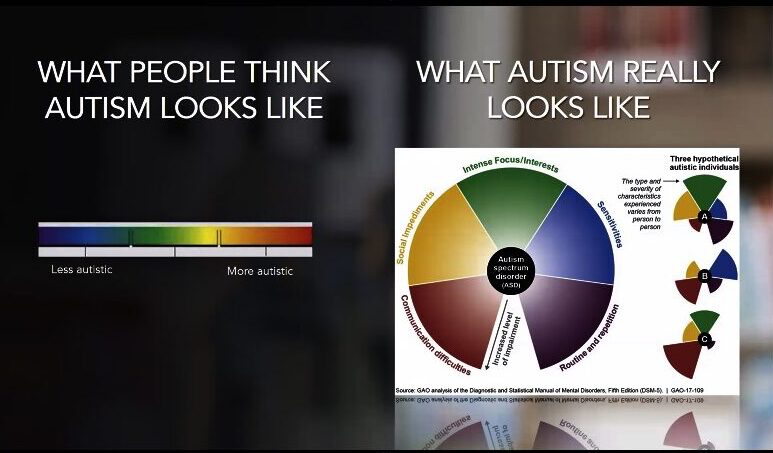
You don’t fit the autism stereotypes you grew up seeing — so nobody took the idea seriously (including, maybe, yourself).
- You’re not a person obsessed with trains, dinosaurs, or LEGOs. But you do know absolutely everything about your favorite celebrity, your pets, your favorite show, a particular historical period, psychology, skincare, true crime, horses, a specific musician’s discography, a fandom, social justice, or the full ecosystem of your favorite fictional world. Your “special interests” just happen to culturally blend in — so nobody clocked them as special interests.
- People describe you as “the empath.” You feel everything — yours and everyone else’s — and it’s exhausting. (This is hyper-empathy, and it’s very autistic, despite what you’ve been told.)
- You’ve spent a lifetime carefully watching how other people act and mirroring it back, and now you’re not entirely sure where the performance ends and you begin. You “pass” in social situations — and then collapse afterward. 💛
- When you’re overwhelmed, your stress response isn’t fight — it’s fawn and flee. You appease, you disappear, you over-apologize, you shut down.
- You’ve been called “too sensitive,” “too intense,” “too much,” or alternately “too quiet,” “too serious,” “too in your head.” You’ve been told you’re just shy, introverted, or an old soul. And maybe some of that is true — AND maybe there’s also something else that better explains the whole picture.
The social stuff has its own flavor.

- You can do small talk — you’ve trained yourself to do small talk — but you hate it, and you’d so much rather have one real, substantive conversation than twenty surface-level ones.
- You’ve always had a hard time in groups. One-on-one, you’re great. Three or more people and you go quiet, or you over-talk, or you leave feeling like you “did it wrong” again.
- You crave routine and predictability, and when plans change suddenly, it’s not just inconvenient — it genuinely knocks you sideways for hours or days.
- You repeat things internally — phrases, songs, conversations on loop — even if nobody would ever see it from the outside.
You’ve collected diagnoses over the years, and none of them have quite fit.
- You’ve been told it’s anxiety. Depression. OCD. Bipolar II. BPD. Complex PTSD. ARFID. AvPD. Sometimes all of the above, on different days, from different providers.
- You’ve been in therapy for years — maybe decades — and you’ve worked hard in it. Some things helped. But the core “this-is-why-I’m-me” piece has never clicked into place. Something is still missing.
- Nobody has asked you about sensory overload — why certain fabrics feel like torture, why fluorescent lights leave you fried, why certain food textures make eating feel impossible, even when you’re hungry, or why you need the background noise off to think (or you are fine with sounds, as long as you can control them). Nobody has asked why an unexpected change in plans can ruin your whole morning, or why your nervous system needs routine and predictability to function.
- Nobody has asked about bottom-up processing — the way you take in every detail before you can see the big picture, which is exactly why group settings, open-plan offices, and crowded restaurants wreck you.
Or, “You were the child who…” — If a learning difference got missed because you were smart enough to compensate:
Dyslexia, dysgraphia, and dyscalculia get missed constantly in bright kids. The signs get written off as “careless,” “not trying,” or “just needs to slow down” — and meanwhile the kid is burning triple the energy to keep up. See if any of this rings a bell:
You were the child who…
- Read late, or read on time but hated reading aloud — and still does. Silent reading is fine (mostly), but the second someone hands you a paragraph to read out loud, your brain short-circuits.
- Got called “a bad speller” your entire life and just learned to lean on spellcheck. Autocorrect is doing heavy lifting out here.
- Could tell a brilliant story out loud but froze the moment you had to write it down. The gap between what’s in your head and what lands on the page is wild.
- Had parents who read with you every night, did flashcards, paid for Kumon, hired tutors, enrolled you in reading programs, stayed up doing homework with you — and you got through. You got the grades. But nobody was looking at why it took all that scaffolding just to keep you at grade level.
- Held a pencil weirdly. Hand cramped after a page. Handwriting looked like it belonged to a much younger kid — or a doctor. Taking notes in class was a nightmare because you couldn’t listen and write at the same time.
- Could do math in your head all day but fell apart the second you had to show your work, line up columns, or memorize your times tables. Word problems? A different language.
- Reversed letters or numbers longer than “you were supposed to.” Still mix up b/d, p/q, 6/9, or left/right as an adult and just play it off.
- Were called “bright but lazy,” “bright but careless,” “bright but unfocused,” “bright but disorganized,” or — the classic — “not working up to potential.”

Or you were the child who looked fine on paper — because you were smart enough to mask the struggle.
- You memorized sight words instead of actually decoding. You figured out patterns. You used context clues. You charmed teachers. You copied off the board faster than you processed it. You outsourced what you couldn’t do to the parent helping with homework, or just didn’t turn it in at all.
- You got A’s and B’s, so nobody screened you. Learning differences rarely get caught in children who are compensating well — until the scaffolding runs out (middle school, high school, college, grad school, the first real job, or when starting a family), and suddenly the strategies that carried you this far just… stop working.
If any of this made you go oh — that’s worth taking seriously.
If you’re a parent reading this:

You love your kid fiercely, and you know them. Something has felt off — or layered, or complicated — for a while. Maybe teachers say they’re fine because the grades are there. Maybe they’re struggling and no one can tell you why. Maybe one professional said ADHD, another said anxiety, another said “let’s wait and see,” and you’re exhausted and still without a real answer. Maybe your kid is brilliant in ways that make their struggles invisible, or struggles in ways that make their brilliance invisible. You want someone who will actually see your child — not just check boxes. That’s what I’m here for.
A note on mood: Anxiety and depression are often symptoms, not the whole story.
Many of my clients arrive convinced their primary issue is anxiety or depression — and sometimes it is, and it needs its own treatment. But for a lot of neurodivergent adults and kids, chronic anxiety and low mood are the consequences of undiagnosed neurodivergence, not the cause of it. Years of masking, being misunderstood, being told to “just try harder,” and pushing through a world not built for your brain take a real toll. Part of what assessment does is help us tell the difference between a mood disorder that needs its own treatment, and a mood response to an unidentified neurotype that needs something different entirely. Often, it’s both. 70% of people with ADHD or Autism have at least 1 mood disorder — and accurately knowing what is and is not going on with you changes the whole treatment plan.


These challenges don’t have to keep getting in the way — at work, at school, or at home.
You (or your child) no longer have to over-function, white-knuckle through the day, mask until you crash, or burn out trying to make up for inattention, overwhelm, sensory overload, slow processing, social exhaustion, reading struggles, or low motivation. There is something that can help you get to the root of what’s actually going on — and come away with real, usable answers.
I provide targeted, strengths-based testing to help lead you (or your child or teen) to the next steps needed to move past these barriers and level the playing field — so you’re no longer juggling with one hand tied behind your back. My goal is for your performance to finally match your ability, so you can show what you actually know and who you actually are.
A big part of my practice is twice-exceptional (2e) clients — highly gifted people who are also navigating ADHD, autism, dyslexia, dysgraphia, dyscalculia, or co-occurring mood issues. These profiles are easy to miss, because the giftedness can mask the struggle and the struggle can mask the giftedness — so the two cancel each other out on paper, and the person ends up looking “average” while privately working twice as hard as anyone around them.
Many of my adult clients are late-diagnosed — people whose neurodivergence flew under the radar in early childhood because they were bright, high-masking, “the good kid,” “the quiet one,” “the sensitive one,” the daydreamer, the perfectionist, the one who just… worked harder. Many are women, AFAB individuals, or BIPOC folks whose presentations don’t match the (very narrow) stereotypes the diagnostic criteria were originally built around. If that’s you, you are in exactly the right place.
Professional assessment and diagnosis can help identify the treatments, strategies, supports, and ADA accommodations that will help you (or your child) finally be able to show what you know — on high-stakes exams (SAT, ACT, GRE, MCAT, LSAT, bar exam, and more), at school, at work, and in daily life.
For students, an assessment can be the first step toward an IEP or 504 Plan — or it can serve as an Independent Educational Evaluation (IEE) or second-opinion testing when a school-based evaluation didn’t capture the full picture (or missed it entirely).
And more than any of that: an accurate diagnosis can give you a framework for understanding yourself — or your child — that actually fits. Maybe for the first time.
— Dr. Monica Blied
Schedule your complimentary 15-minute consultation →
A quick note on fit: If you’re looking for a rapid-turnaround diagnosis to get a form signed or a medication started, I’m probably not your best match — my evaluations are thorough and take time, because that’s what produces answers you can actually trust and use. If you want to deeply understand yourself or your child, let’s talk.
Watch this 6-minute video to learn more about my 2 testing options and answers to FAQs about the testing process.
Description of the Evaluation Process for ADHD, Autism Spectrum Disorder (ASD), Giftedness, 2e, Mood Disorders, and Learning Differences:
What does the Assessment process involve?
My approach to evaluation is strengths-based from the start. I am not just looking for what is hard for you (or your child)— I am building a complete, accurate picture of how your brain works, including where you are capable, perceptive, creative, and strong. That full picture is what makes the results actually useful.
A thorough assessment starts well before the first day of testing. Before we meet, you will complete rating forms, symptom inventories, and questionnaires at home. For adults, a partner, spouse, or parent will also complete behavioral and mood ratings. For children and teens, both parents and teachers participate. I also review past school records, college transcripts, and any previous evaluations — because the history often tells us as much as the testing does, and context changes everything.
Then we meet for a clinical interview — typically via telehealth — to go through your background, developmental history, and current experience in depth. For autism evaluations, there is an additional interview that may include family members or close partners. These steps are important because understanding how you move through the world – and accurately identifying what is and is not going on for you – requires more than a single conversation or intake form.
That is all before the first day we meet for testing…
What happens on the first day of testing?
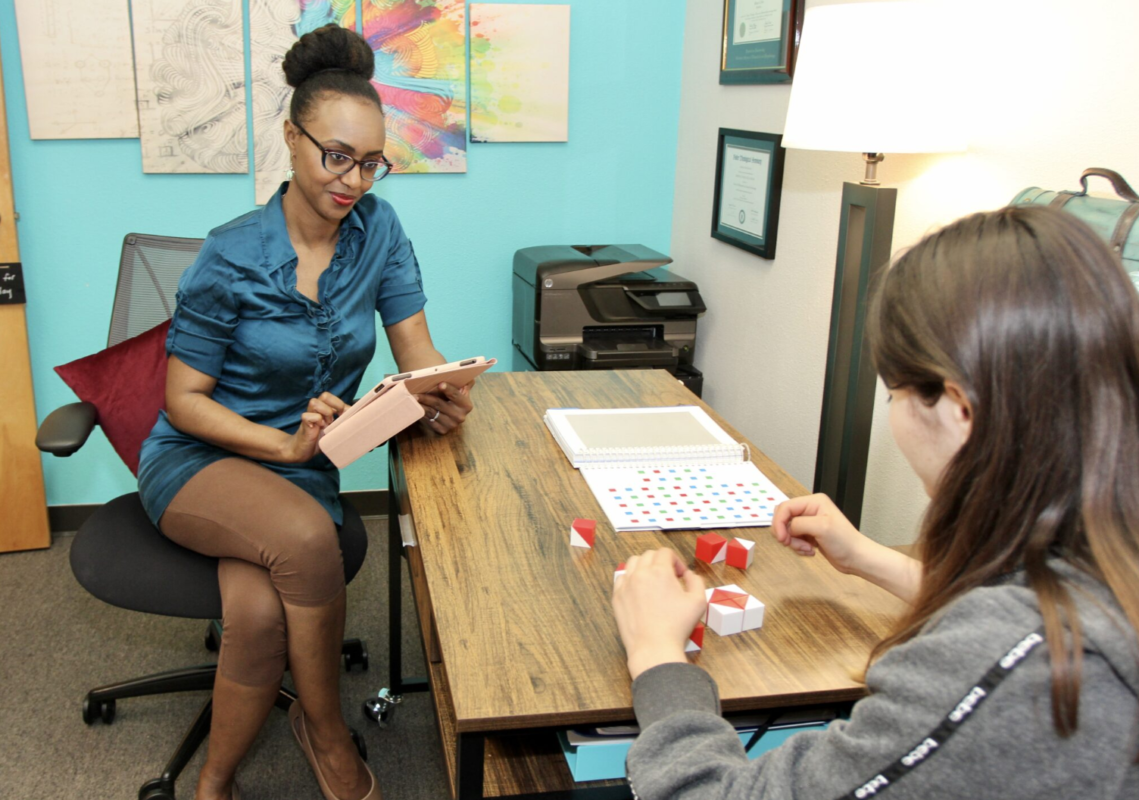
On the days of testing, we will sit together (via video call online or in person) and go through a number of activities that will explore many areas of functioning. Some of the evaluation is done using iPads that I provide, some over the computer, some using blocks or other things you will manipulate with your hands, while other parts are completed using traditional paper and pen.
The in-person and/or video testing takes place over 4-10+ hours, which will be divided between 1-3 days. Before this, we will meet for a clinical interview. The clinical interview takes place by video, and typically lasts 2-3+ hours. For autism testing, there will be an additional autism evaluation interview by video, which typically lasts 2-3 hours and can involve just the parents of the person being evaluated, or the client and their family members (partners, friends, parents). Dr. Blied determines which is the best fit after the clinical interview.
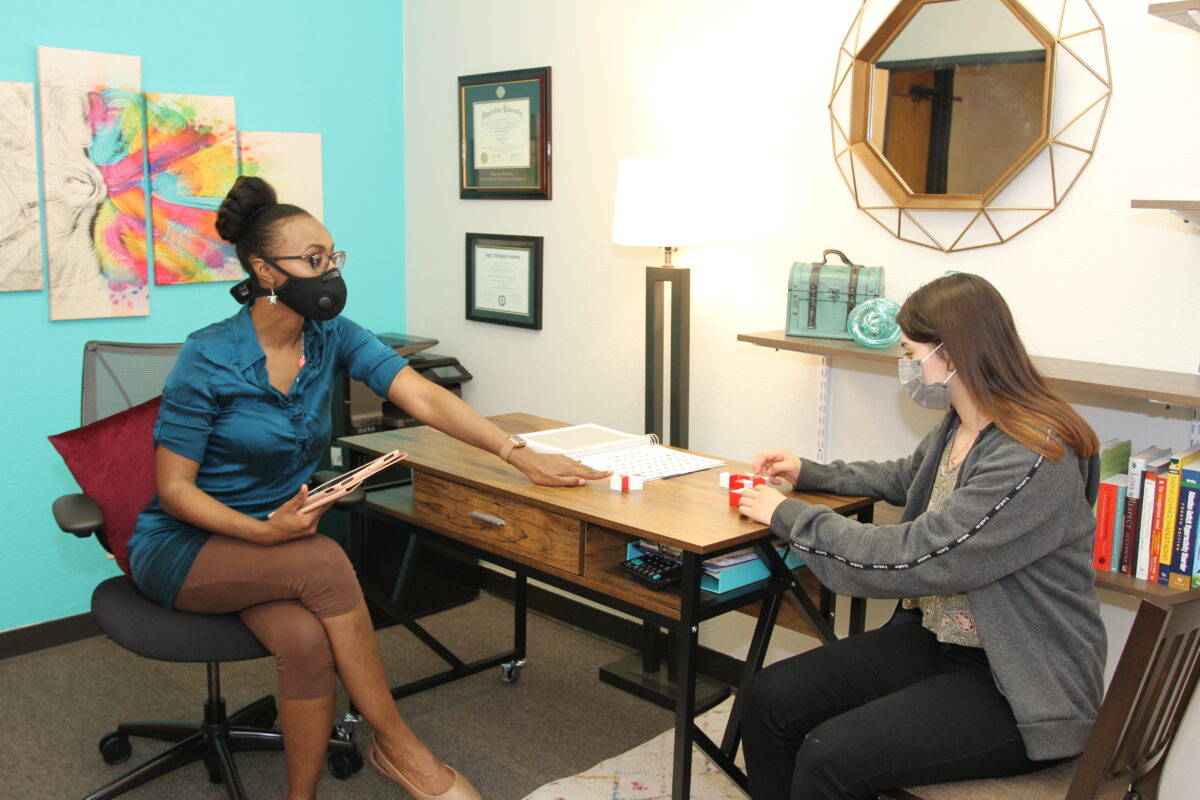
We will do a variety of things together on the days of testing. Some activities will be very easy, and some very challenging. Either way, I encourage you to just try your best!
Health and Safety During In-Person Testing in 2026 & beyond: I am committed to keeping my clients and their families safe throughout the testing process. Both the examiner and client wear masks during in-person sessions. An air purifier runs throughout the entire appointment, and all materials are sanitized between uses. If you have specific health needs, sensory considerations, or other concerns about the testing environment, please reach out before your appointment — accommodating you well is part of doing this work well.


Areas (domains) of comprehensive testing include:
- Intelligence or IQ Measures (Verbal Comprehension, Nonverbal/Perceptual Reasoning, Visual-Spatial Skills, Processing Speed, and Working Memory)
- Learning & Memory (Verbal and Nonverbal/Auditory)
- Achievement (Reading, Written Expression, and Mathematics)
- Executive Functioning
- Attention & Concentration
- Mood, Emotions, and Behaviors
- Language (Expressive and Receptive)
- Fine Motor Skills
- Adaptive Functioning
- and, Cognitive Effort.
What happens after testing?
Once testing is complete, I score and evaluate everything — the test results, the rating forms, and all the records you provided. This is followed by a 1-2 hour feedback session, typically one to two weeks later, where we go through your results together in full. You will learn your diagnosis, understand your specific profile of strengths and challenges in real depth, receive clear and practical guidance on next steps, and get referrals to specialists who can support what comes after the evaluation.
For many clients and families, the feedback session is the first time everything has been explained in a way that actually makes sense — and that clarity changes what is possible going forward.
Will I receive a written summary of the results?
Yes! You will receive a 2-10+ page “feedback handout” which details your diagnosis and also provides referrals and recommendations for the next steps in managing your condition(s). If you choose, you can also receive a formal report which will include a summary of your testing results and background, and can be emailed to you around 4-6 weeks after the feedback session. With the comprehensive assessment option, this report can be used to support ADA accommodations for school, work, or high-stakes testing (i.e., for the SAT, GRE, ACT, LSAT, MCATs, etc.)
After your evaluation: Continuing the work
A diagnosis answers the question of what is happening. The work that follows is figuring out what to do with that understanding in daily life — and that work does not end when the feedback session does.
To start, I provide a detailed feedback handout and assessment report with concrete recommendations for your next steps. This typically includes accommodations that match your specific support needs and brain style for school settings (from elementary through graduate school), for high-stakes testing (when relevant), and for work.
For clients who want to keep building, I created Faces of Health — a clinically grounded digital platform with two practical learning pathways: one focused on understanding and supporting a neurodivergent brain, and one focused on managing chronic stress and chronic illness. Both are built on the same neuroscience and clinical framework I use in my assessment and therapy work; and, both were designed specifically for people whose brains and bodies have been underserved by general wellness content.
Faces of Health is not therapy and is not a replacement for clinical care. It is practical education and skill-building you can return to between sessions, after an evaluation, and in the everyday moments when you need something concrete to come back to.
Learn more at facesofhealth.net and learn.facesofhealth.net
So, tell me again what all is included in the assessment process?
The targeted assessment includes: records review, clinical interviews, in person and/or telehealth testing, a feedback session, professional consultation, a feedback handout, and an optional formal report with a strengths-based explanation of assessment results, along with recommendations for your next steps, including school or work accommodations or high-stakes testing accommodations.
*The testing option described above includes approximately 28-40 total clinical hours (add-on services are charged at an hourly rate)
A SECOND OPTION:
Abbreviated psychodiagnostic assessment option for ADHD (or Autism Spectrum + ADHD), IQ & mood disorders:
The psychodiagnostic assessment** is used to help determine if you are living with Attention Deficit Hyperactivity Disorder (ADHD), Autism Spectrum Disorder (ASD), and/or any psychological or mood disorders. This psychodiagnostic testing will help you know your diagnosis and give recommendations for next steps. Included are a clinical interview to understand your history and diagnose any co-occurring mood disorders (or two interviews if you are also being evaluated for autism), diagnostic inventories, records review, and an objective assessment of intelligence and attention & concentration, as well as an evaluation of the domains sensitive to problems with attention: working memory, processing speed, and executive functioning.
This option involves an investment of approximately 15–24 clinical hours (less testing and time involved than the comprehensive testing option above).
**This option is not suitable if the report/scores are needed to document the need for accommodations for the SAT specifically.

So, how much is the assessment?
Assessment fees range from $4,500 to $8,500, depending on the scope of your evaluation. Psychoeducational assessments may include my attendance at one IEP meeting at no additional charge.
I accept HSA and FSA cards, all major credit cards, and CareCredit. CareCredit offers a 12-month, zero-interest payment plan for qualified clients — click here to see if you qualify.
I am out-of-network with private insurance. At your feedback session, I provide a superbill — a detailed receipt you can submit to your PPO insurance plan for potential out-of-network reimbursement. If your insurance requires billing and procedure codes before your evaluation begins, email drblied@drblied.com and I will send those to you directly.
If cost is a barrier, The Jonathan Foundation offers scholarships specifically for psychoeducational assessments. See the Resources section below to learn more and apply.
Dr. Blied is one of the go-to thought leaders on late diagnosis of autism and ADHD (diagnosis after early childhood). Her areas of specialization are assessment with AFAB (assigned female at birth) and non-binary individuals, marginalized individuals, and individuals who are both intellectually gifted + neurodivergent.
Dr. Blied’s Executive Functioning Skills Coaching Group
Learn to work with your brain—not against it.

This virtual coaching group is for adults and older teens (16+) who want practical, sustainable support with planning, organization, time management, task initiation, and follow-through. It is especially well-suited for people who have recently received a neurodivergent diagnosis and are ready to move from understanding their brain to actually working with it in daily life.
Each week combines brief lessons, reflective discussion, and guided practice. We look honestly at how stress, anxiety, mood, and energy affect executive functioning — and we build approaches that are flexible enough to work on hard days, not just good ones.
This group is trauma-informed and neurodiversity-affirming. There is no one-size-fits-all productivity system here. The goal is to help you build something that actually fits how you think, how you feel, and how your life is structured right now.
The investment is $65 per session, or $468 for all 8 weeks when paid in advance.
To increase access for marginalized individuals, reduced-rate scholarships are available for BIPOC, LGBTQIA+, and people with chronic illness or disability. Scholarship requests can be submitted privately on the form below.
Each week builds upon the last, introducing targeted executive functioning skills through practical tools, guided practice, and real-life application:
Week 1 – Foundations: Planning & Time Awareness: Explore how “time blindness,” mood, and motivation affect planning, and build a visual weekly schedule to create structure and consistency.
Week 2 – Task Initiation & Sequencing: Practice micro-steps, “First/Then” routines, and If-Then cues to make starting tasks easier and strengthen daily follow-through.
Week 3 – Working Memory & Organization: Create external systems—such as planners, capture tools, and reset routines—to keep information organized and thinking clear.


Week 4 – Stress & Emotion Regulation: Learn grounding, sensory resets, and STOP-THINK-ACT strategies to manage overwhelm and restore focus.
Week 5 – Flexibility & Procrastination: Identify how perfectionism and anxiety fuel avoidance, and use “tiny wins” and compassionate flexibility to build momentum.
Week 6 – Habits, Motivation, & Energy: Design small, sustainable routines using cue-routine-reward loops and strategies for low-energy or high-anxiety days.
Week 7 – Communication & Self-Advocacy: Build confidence in asking for help, setting boundaries, and communicating needs effectively in everyday settings.
Week 8 – Burnout Prevention & Maintenance: Recognize early signs of overwhelm and create a 90-day maintenance plan to sustain balance and progress.

Testimonials from Previous Group Members
Resources
The Jonathan Foundation – Apply for scholarships for assessments